Two ads David Ogilvy wrote to hire for his own agency, and how to write one like them.
David Ogilvy is like the Benjamin Franklin of advertising, quirky, quotable, and didn’t hold back when teaching or sharing his secrets.
He built an ad agency empire that stretched the world and sold for some of the most iconic brands like Mercedes and Rolls Royce. Making the companies he represented and his own Billions of dollars along the way.
So what does this have to do with recruitment? EVERYTHING, because Ogilvy took his own medicine and used his powers in advertising to hire the very best. Because he knew the only way to be the best Ad agency was to have the best talent (seems obvious when you put it like that).
Between Ogilvy on Advertising, and his Biography King of Madison Avenue there’s a handful of Ads he wrote to attract top talent.
When i say Ads I use the word advertisement intentionally. What I mean, is these were compelling pieces that piqued curiosity, and set alignment for the right kind of people. What we’re talking about is fighting against indifference and either pulling someone in or pushing them out. Which is exactly what a good Job Ad does.
It’s a compelling case for why Recruitment is part marketing & part sales (when done right).
There’s two ads of his I’ll be focusing on today. They’re both different, create friction as a filter, and tell a compelling story in very few words.
Ad 1
Ad 1 was regularly shared in a recruitment brochure that would get pushed out to readers of their printed magazine.
“If you join Ogilvy & Mather, we shall teach you everything we know about advertising. We shall pay you well, and do our damnedest to make you succeed. If you show promise, we shall load responsibility on you — fast. Life in our agency can be very exciting. You will never be bored. It’s tough, but it’s fun.”
From Ogilvy & Mather’s recruitment brochure.
This ad can be looked at more of a company ethos, something that gets put before any specific job. An about us, if you will.
A stat Ogilvy regularly shared is in ads, the headline and first few sentences are the determining factor on whether the full ad gets read or scrolled past. It represents 80% of the budget, since only 1 in 5 will read past the headline.
This first paragraph is a compelling case for why someone should read on. It tells a story of the kind of company they are. They’re educators, they provide well for their employees, and make sure that they will encourage your growth.
They also call out that this will be tough, Ogilvy never shirked from the tradeoff, that those to succeed at his firm would need to have an appetite for the midnight oil (a hard work ethic).
Show dont tell
Normally companies will use superfluous terms, that mean little to nothing to the reader, like the term “exciting”. Before proceeding with a vanilla job description that drifts in the sea of sameness of the rest of job postings out there.
Ogilvy uses the word “exciting” only after explaining what that looks like. Learning a ton, challenging work, making good money, he’s earning the term.
Exciting is a term used by everyone, it’s lost its impact. What do they mean by exciting? And if they can answer that question, whatever the answer is, SHOULD BE WHAT’S WRITTEN FIRST. Because you’re being specific, the excitement will come from pulling people in about what you do and how you operate.
This is something he learned from Claude Hopkins, and regularly referenced. In a market that has lots of “me-too” products. The ones that’ll win, is the marketer who can best articulate what exactly they do, what it looks like, and how it feels.
A good exercise is taking a job description that your team would regularly post. And instead assess, whats the core items that make up someone’s job. And instead of writing bullets of duties. Write out what a typical day looks like for one of their colleagues. Use the colleagues name or a pseudonym.
Be Like Bob
Let’s take Bob the Tax Manager.
On the three days of the week that he goes into the office, he gets in around 9. He checks in with his team of 4, made up of 1 supervisor, & 3 associates. Discusses their client base made up of Manufacturers, & logistics companies doing between 5-20 mil in revenue. At any given time he’s working with 40 clients. A big focus for him is reviews & mentorship. He also meets with his client base regularly, and is given time to market his firms services, since that’s a big factor for his promotion to director.
Tax Managers can relate to Bob, many want to be Bob. They want more time to mentor and train their staff, to go meet with clients, to develop their accounts. There’s nothing exactly special about this, other than they can see what this kind of role will look like.
It also removes the anxiety of reviewing a job description that looks just like their current environment and makes one wonder “are all jobs just like the place i’m trying to leave?”
Ad 2
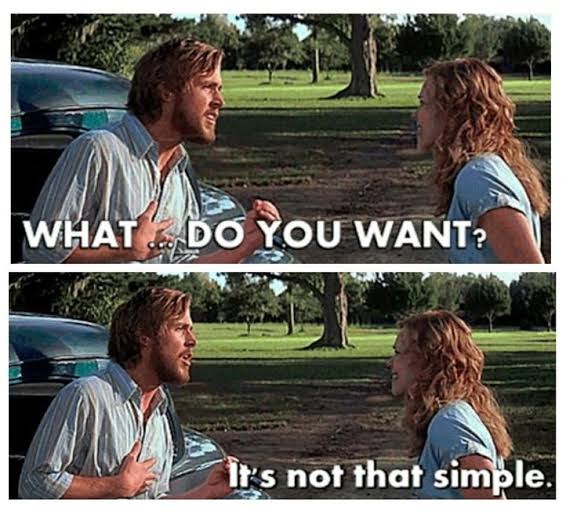
I like to use the term A-players when discussing top talent (Shout out Steve Jobs). Ogilvy used the term, Trumpeter Swans, and even though I don’t live near swans (Minnesotan here). I still know what he means, and i’m pretty sure anyone who’s watched The Notebook would know what he means too.
Here’s how Ogilvy did it:
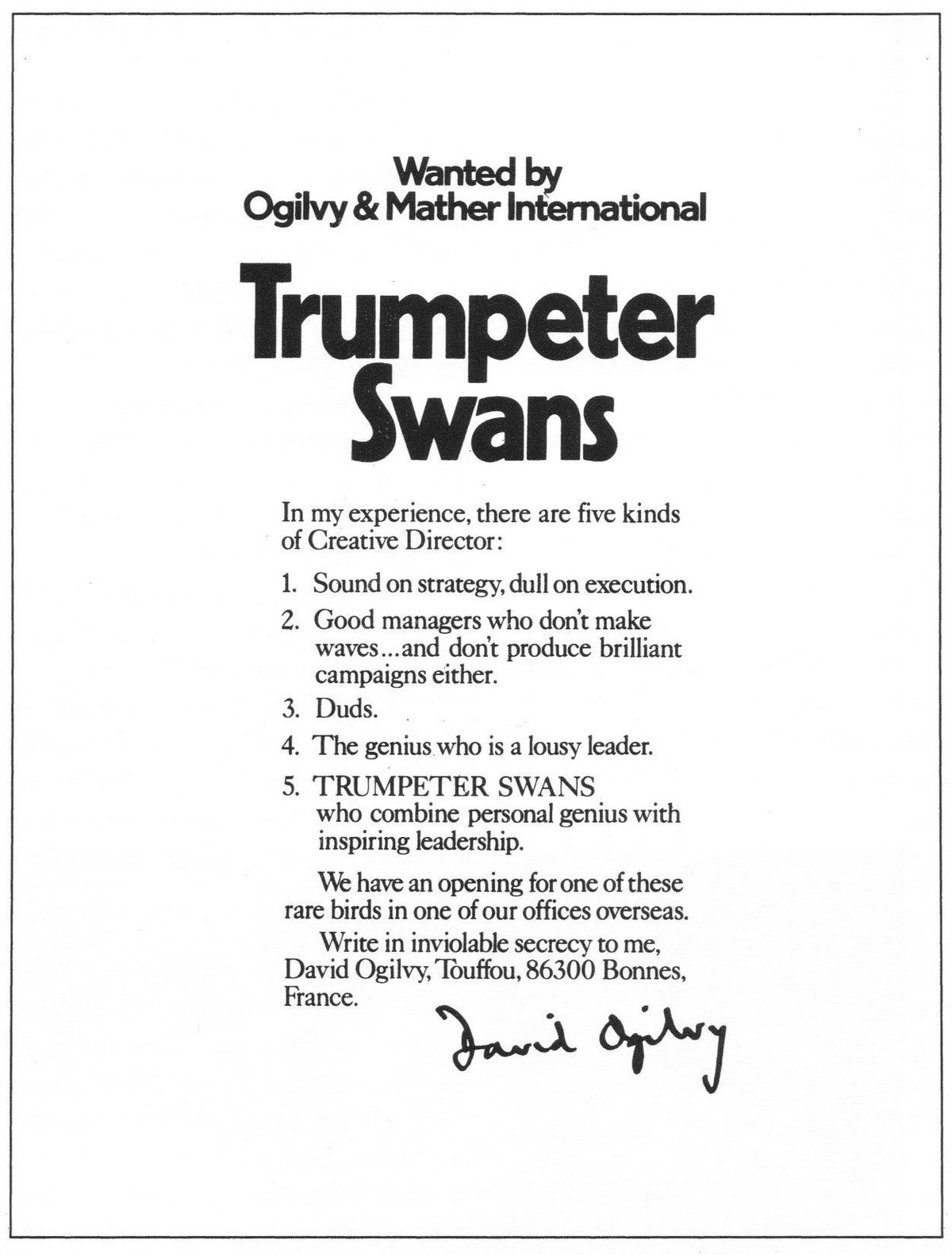
This is nothing like what you’ll see posted by 99.9% of companies out there when hiring. There’s no job duties included. Creative Directors know what their job entails, why spell it out to them?
And the nuances to what a creative director does at Ogilvy versus another firm will be quickly discovered with a short conversation.
The point of the ad is to create curiosity that they engage with. He does this by listing an industry problem, most Creative Directors fall into one category:
- Dull
- Bureaucratic
- Creative but can’t Lead
Then there’s the rare few who can build brilliant campaigns and inspire those around them, those rare birds. It’s a call to them.
He expands on this concept in another piece:
“The biggest problem which besets almost every agency is the problem of producing good campaigns. Copywriters, art directors, and television producers are easily come by, but the number of men who can preside over an agency’s entire creative output – perhaps a hundred new campaigns every year – can be numbered on the fingers of one hand. These rare trumpeter swans must be capable of inspiring a motley crew of writers and artists; they must be sure-footed judges of campaigns for a wide range of different products; they must be good presenters; and they must have a colossal appetite for midnight oil.”
If this isn’t filtering out applicants and pushing more out then you pull in, idk what is. It’s a stance that they won’t accept mediocrity, and anyone who feels the least bit mediocre, or uninterested in working hard will likely be intimidated, or look at this type of ad as being offensive. Like it’s a personal attack on them (being dissed by the preeminent dead never feels good… i get it)
Steve Jobs & A-Players
Steve Jobs is the one who I trace the term of A-players back to. In Becoming Steve Jobs, he talks about how A-players only want to work with other A-players. The proof is in the pudding with the run he had at Pixar and his return to Apple.
I don’t think anyone would deny that there was friction in getting hired by and working for Steve Jobs, yet he built a brilliant team that changed how we interface with technology 20+ years later.
Now i’m not saying that means we have a carte blanche to act like Steve Jobs in his less than glamorizing moments (though Walter Isaacson didn’t do him justice). What i’m saying is that you shouldn’t hold back in the specificity of who you are for, the types of people that will do well at your firm, and the types that will not work out.
If anything people will appreciate the specificity even if it means the role’s not for them, since they’ll know where their job search efforts will be better spent elsewhere.
So an exercise might be, okay what type of backgrounds/hires have done great work here? What were they like, their strengths both technically and behaviourally. As well as the inverse, what kind of people didn’t work out.
Then spell it out as specifically as possible, and if you can add a little tongue in cheek, the friction will likely sting less.
Let’s take Personal Injury Attorneys as an example of what you might spell out.
Most Personal Injury Attorneys fall into 4 buckets
- Can manage a docket, never seen a courtroom
- Can litigate, can’t keep a paralegal
- Great with clients, files collect dust
- Then there’s the rare ones who can try a case and run a team
We’re hiring for an aspiring number 4.
Here, we’ll do our best to teach you to litigate like you’re Vinny Gambini. Your docket will be bursting with cases that you’ll be earning a shared fee from (we love aligned interests and attorneys who make a ton by working here). You’ll make a direct impact on people’s lives that’ve been injured. It’s challenging work, but it’s rewarding in numerous ways too.
Now I’m not Ogilvy, (if i was i’d be living in a castle in France), but the work itself of writing out an ad that is specific about the world they’ll live in. What you stand for, and the type of people that’ll thrive will put you in a rare playing field.